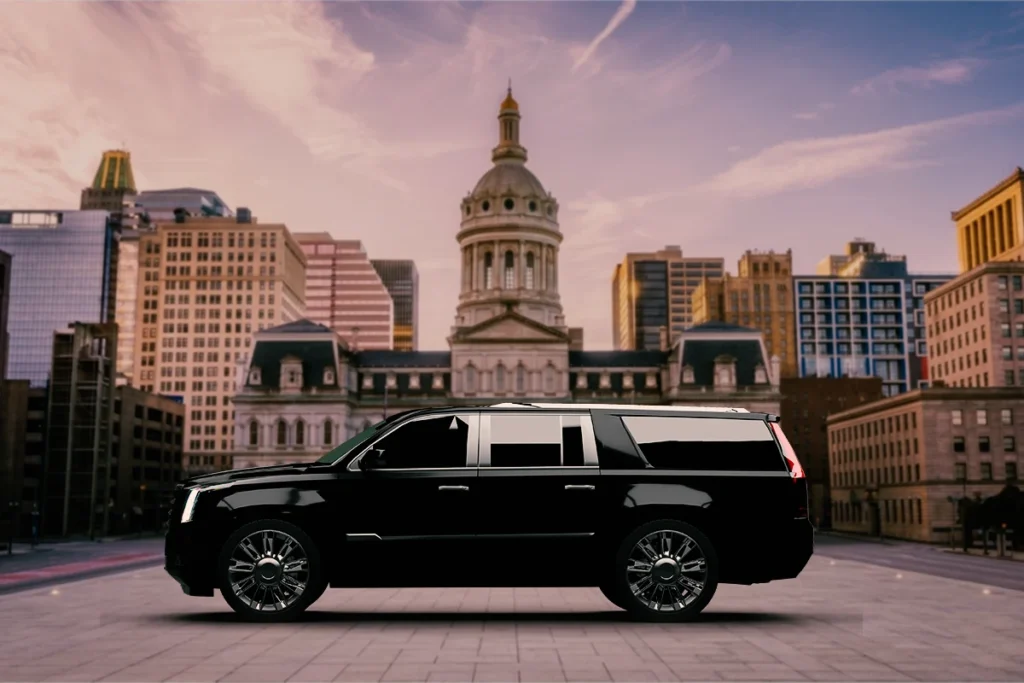
Baltimore to DC is one of the most frequently traveled trips in the Mid-Atlantic. Daily commuter, tourist visiting the National Mall, local on your way to a sports game, no matter what it is, as long as you have to cross this 40-mile highway, it is imperative to get in on the particulars of this highway. This guide offers a detailed insight into all the existing means of transit so that your trip can be smooth.
The route that can be taken when navigating between Baltimore, MD and Washington, DC can be by rail, road or bus. Both solutions provide varying amounts of cost, speed, and convenience. The fact that these two cities have been so connected makes the infrastructure sound, yet at the same time, the number of people traveling is so high that you must have a solid idea of how to get away without wasting time.
The attraction of this route is based on the principle of the twin cities in the area. A good number of individuals prefer residing in Baltimore in the cheaper areas and commute to the federal centers of DC. The Baltimore to Washington DC transportation is hence made to accommodate thousands of passengers on a daily basis on various platforms.
Ready to cruise around the city in a comfortable limo service or one of our other immaculate fleets?
Our Fleets
Sprinter van DC
Hummer Limo
Party bus
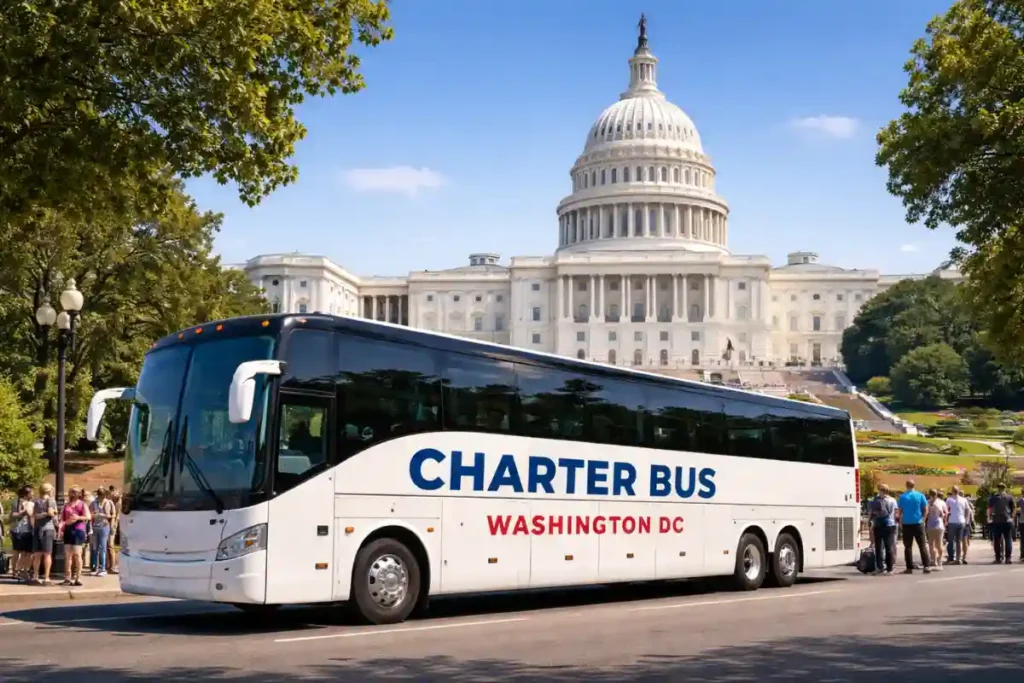
Charter bus Washington DC
Executive Sedans
Book our Washington DC. Limo service with car service in DC

Overview of Traveling from Baltimore to Washington DC
The initial factor to consider when planning on getting there, that is, when planning how to get to Washington when beginning in Baltimore, is the starting point factor. The city of Baltimore has two main train stations and a number of bus stations. The location that you choose to abandon will highly influence your total travelling period and the challenge of your trip.
It is between 38 to 42 miles between Baltimore and DC, depending on your destination. That will be taken as a little way, but the so-called I-95 route is not the location where to pass over the issues of the most overcrowded traffic in the United States. This is why the ideal means of traveling between Baltimore and Washington DC is public transport, where the person has no stress of driving.
Distance and Travel Time
On average, it takes 30 to 60 minutes of time to travel between Baltimore and DC via train. It depends on your mode of transport (driving or not) and the trip would last between 50 minutes during the calm Sunday mornings to over 2 hours during the wet rainy Friday afternoon traffic jam. These are the most significant changes that should be understood to make a successful trip.
The physical tracks would occupy some 40 miles for those who would have to know the distance between Baltimore and DC by train. The fastest one is the Acela Express of Amtrak, which can take less than 35 minutes between Penn Station and Union Station. The line of commuters and the regional services are somewhat longer as they are forced to make an extra stop at the suburbs like BWI Airport and New Carrollton.
Why This Route Is So Popular
The Maryland association with Washington DC is critical to the economic position of the region. The political and financial center of the country is Washington DC. In contrast, Baltimore has a rich cultural scene, a great deep-water port, and international healthcare facilities such as Johns Hopkins.
In addition to work, tourism contributes to Baltimore to Washington travel in enormous sums. Tourists usually arrive at BWI Airport and must know the most appropriate mode of transport to use to travel between Baltimore and Washington DC to visit the white house or the museums in the Smithsonian.

Best Ways to Travel from Baltimore to DC
No way of travelling is the best, and it is up to priorities to make the right choice. However, to find the lowest possible price, the bus or the MARC train would normally prevail. Amtrak is the speed king when this is a criterion. A car service in DC may prove the most reasonable choice, especially to people who are traveling with a big family or huge luggage.
In the analysis of the Baltimore to DC transportation route, the traveler normally has four key categories of transport options, including but not limited to commuter rail, intercity rail, regional bus lines, our vehicles. They all have a golden point in addressing scheduling and pricing that we will discuss in the points below.
Train Schedule, Time & Cost
The MARC Penn Line operates seven days a week, while the Camden Line operates only on weekdays. A one-way ticket on the MARC train is a flat $9.00, making it one of the most affordable commuter options in the country. It is a no-frills service, but it is clean, efficient, and direct. contrast, train tickets from Baltimore to DC via Amtrak can vary wildly in price. If you book weeks in advance, you might find a “Value” fare for as low as $6.00. However, if you buy a ticket at the last minute for the Acela Express, you could pay upwards of $60.00 or more.
Bus Services
Regional buses will give good competition to Baltimore to Washington DC on a budget query. The Baltimore Downtown Bus Station is served by service providers such as Peter Pan, Fix Bus, and Greyhound on regular routes. These buses are fitted with the new facilities such as power points and Wi-Fi.
Students and low-end passengers tend to favor the bus traveling between Baltimore and DC. Although this bus is sensitive to traffic on highways, it has the advantage of having more pick-up points, which may be nearer to the house or hotel than the train station.
Bus Pricing & Frequency
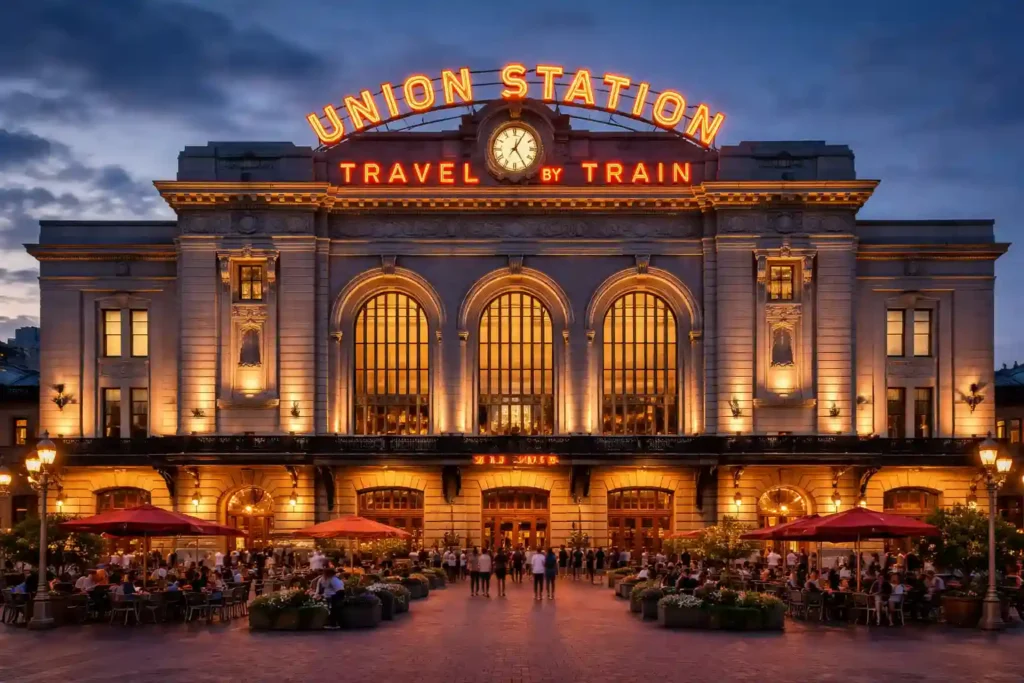
The fare in a bus is normally between 10 and 22 dollars. Bus companies employ dynamic pricing models, unlike the MARC train, which is fixed-priced. What this implies is that the earlier you book your transportation between Baltimore, MD, and Washington DC the cheaper you will pay.
The average bus routes are approximately 1 hour and 15 minutes. Nevertheless, one should make sure to verify the exact point of arrival at DC. The majority of you would get to the Union Station Bus Deck, where you can easily take metro Baltimore to Washington DC (through the Red Line) after getting to the city.
Driving & Car Options
To most, the easiest means of commuting between Baltimore and DC is by car, especially when the ultimate destination is the suburbs of DC, such as Bethesda or Silver Spring, as opposed to downtown. Driving also gives you more room to pack on gear and have your way as long as you are going to be on time.
The Baltimore, MD, to DC drive is, however, not easy. You have the option of I-95, the highway that is fast and has a lot of trucks, or the Baltimore-Washington Parkway (MD-295), the scenic highway that has a high probability of huge delays due to its narrow lanes and absence of shoulders.
Traffic & Parking Considerations
The major discouraging factor among individuals considering the way from Baltimore, MD, to Washington, DC is traffic. Congestion during morning times is normally at its highest from 7:00 AM to 9:30 AM. You should also consider the price of parking, which can be quite high as well, when you are driving.
In case you want to spend more money and have a more comfortable experience with little stress, you can hire a professional car service in DC and enjoy the comfort of a vehicle without the trouble of searching the winding and rather costly one-way streets and parking lots of D.C.

Train from Baltimore to DC (Most Popular Option)
The transport system of the region is based on the rail connection. When answering the question, are there any trains between Baltimore and DC, people should say a resounding yes; however, you should select the appropriate service. The main one is Baltimore Penn Station, which is situated in the Midtown area, and Camden Station is situated directly adjacent to the stadium of the Orioles.
The decision between the budget and your time to take the train between Baltimore and Washington DC would necessitate you to check both your budget and your time. The MARC train is the best value to most travelers, although Amtrak manages to provide some amount of comfort (and Wi-Fi) that MARC just can not.
| Vehicle Name | Passengers | Bags | Availability | Starting Price (Hourly) |
| Cadillac XTS | 03 pax | 2 | 24/7 | $69 |
| Cadillac (Sedan) | 03 pax | 2 | 24/7 | $75 |
| Mercedes S-Class | 03 pax | 2 | 24/7 | $95 |
| Maybach S680 | 03 pax | 2 | 24/7 | $225 |
| BMW (Sedan) | 03 pax | 2 | 24/7 | $112 |
| Rolls Royce | 03 pax | 2 | 24/7 | $375 |
This table highlights why the metro train from Baltimore to DC (as MARC is often colloquially called) is the go-to for locals. It provides a consistent price point that doesn’t punish you for traveling at the last minute.
Train Ticket Prices & Booking Tips
To get the best train tickets from Baltimore to DC, download the “CharmPass” mobile app for MARC tickets. This allows you to buy tickets on your phone and activate them just before boarding. For Amtrak, the “SmartFares” or “Value” tickets are released weeks in advance; if you see a $6 or $10 fare, grab it immediately.One “pro tip” for the Baltimore to DC public transportation user is to check for “Step-Up” tickets. In some cases, MARC weekly or monthly pass holders can pay a small surcharge to ride an Amtrak train, offering more flexibility for the daily commuter.
Bus from Baltimore to Washington DC
Although the train is quicker, the bus is also an essential component of the way to travel between Baltimore and Washington. The bus stations may even be closer to people living in South Baltimore or around the stadiums instead of walking long distances to the North along Penn Station.
Major Bus Providers
Greyhound and Peter Pan control the Baltimore to dc bus travel market. Nonetheless, Megabus and Flixbus have also become prominent in share as they provide curbside collections and deliveries thereby saving you the hassle of winding through a massive terminal.
Every provider also possesses its terminal logic. As an example, a passenger using the service of Greyhound can choose a specific terminal, which is Haines Street, and others may arrive at the White Marsh Mall or the University of Maryland-Baltimore. The correct address of the ticket Stop is always to check.
Pros & Cons of Bus Travel
- Pros: Generally the lowest cost; power outlets are usually guaranteed; multiple departure points in Baltimore.
Cons: Highly susceptible to I-95 traffic; boarding process can be slower than the train; stations are sometimes in industrial areas.
Driving from Baltimore to DC
If you decide to drive from Baltimore MD to Washington DC, you are entering one of the busiest traffic corridors in the world. Knowing the routes is essential for survival.
Route Overview (I-95 & BW Parkway)
There are two primary ways to make the trip:
- I-95 South: This is the standard interstate. It features 4-8 lanes in various sections and includes the “Express Lanes,” which allow you to pay a toll to bypass traffic. This is the best route if you are heading to the western side of DC or Northern Virginia.
The BW Parkway (MD-295): This is a federally maintained parkway. No commercial trucks are allowed, which makes for a different driving “feel.” However, there are only two lanes in many spots, meaning a single accident can stop traffic for hours.
Costs (Fuel, Tolls, Parking)
The cost of driving from Baltimore to DC isn’t just gas. You must account for:
- Tolls: If you use the I-95 Express lanes, tolls can range from $2 to $30 depending on the time of day.
- Parking: In downtown DC, parking garages charge between $20 and $45 per day.
- Maintenance: Commuting 80 miles round-trip daily adds 20,000 miles to your car annually.
For many professionals, the cost and stress of driving make a much more attractive option, especially when preparing for an important meeting or event.
Public Transportation Options
Once you arrive in the capital, you’ll need to understand the metro connections from Baltimore to Washington, DC. DC’s “Metro” (the subway system) is different from the MARC train.
Metro Connections Explained
- All the MARC trains and Amtrak trains reach Union Station. At this point, you can go at once down into the Metro station and take the Red Line. The Red Line can take you to:
- Metro Center: To change to Blue/Orange/Silver lines.
- Gallery Place: To the Capital One Arena and the blue and yellow lines.
- Farragut North: The business district of K Street.
Combining Train + Metro
The most efficient mode of transport to travel between Baltimore and DC can be through a multi-modal mode. You ride the MARC train to Union Station and then hop on the DC Metro to take you to your ultimate destination, office or museum. This saves the cost of parking, which is 40 dollars, and the hassles of city living.
Best Way to Travel Based on Your Needs
We often get asked, “What is the best way to travel from Baltimore to Washington DC?” The answer depends on your specific situation.
Fastest Option
The fastest way to get from Baltimore to DC is the Amtrak Acela. It reaches speeds of up to 150 mph on some sections of the track (though not the whole way to DC) and bypasses all highway congestion.
Most Convenient Option
For pure convenience, especially if you have luggage or multiple passengers, nothing beats a private vehicle. If you want that convenience without the driving fatigue, a car service in DC is the gold standard for regional travel.
Insider Tips (From Real Travelers)
- Do not get caught in the middle: MARC trains are less frequent at lunchtime (10 AM – 2 PM). When you are in a hurry, never keep yourself in the station long; always look at the schedule.
- The Camden Line disadvantage: The Camden MARC line is walking distance outdoors as long as you are staying in the inner city of the harbor, which would save you fifteen dollars in an Uber to Penn Station.
- Reverse Commute: It is not only the other way now, but otherwise, all the traffic is sluggish!
- BWI Secret: Sometimes, it is more convenient to drive to BWI Rail Station and park in their huge garage and get the train there. It saves half of your driving time.
Conclusion
I found it easy to travel between Baltimore and DC after knowing how the system works. There is an option of the high-speed Amtrak Acela or the $9 MARC train to suit every budget and time schedule. Using public transport, you help build a cleaner world as well as avoid the mythological headache of traffic on I-95.
You are either going there to see the cherry blossoms or to attend a board meeting; either way, there is no need to rush as you book your tickets and head to enjoy the transport between these two historical cities of America.
Atlas Limousine and Sedan DC offers the best car service in the area, and you can rely on it being the most professional and reliable one.
1. Is there a train from Baltimore to DC on weekends?
Yes, the MARC Penn Line offers weekend service with multiple departures on Saturdays and Sundays. However, the Camden Line only operates on weekdays. Amtrak operates full service seven days a week.
2. How far is Baltimore from DC by train?
The trip is approximately 40 miles and takes about 35 minutes on Amtrak and about 60 minutes on the MARC commuter train.
3. Can I use my MARC ticket on the DC Metro?
No, they are separate systems. You will need a MARC ticket for the trip from Baltimore to DC Union Station, and a SmarTrip card or mobile payment for the DC Metro.
4. Where do I park at Baltimore Penn Station?
There is a parking garage directly adjacent to the station and several surface lots nearby. However, these can be expensive ($20+ per day), so many locals prefer to take a rideshare to the station.
5. Which is better: I-95 or the BW Parkway?
If you are driving a car, the Parkway is often more pleasant because there are no trucks, but I-95 is generally more reliable if there is an accident because it has more lanes to handle the overflow.